Gravity+ track #
Looking to specialize in gravity in your Master’s programme?
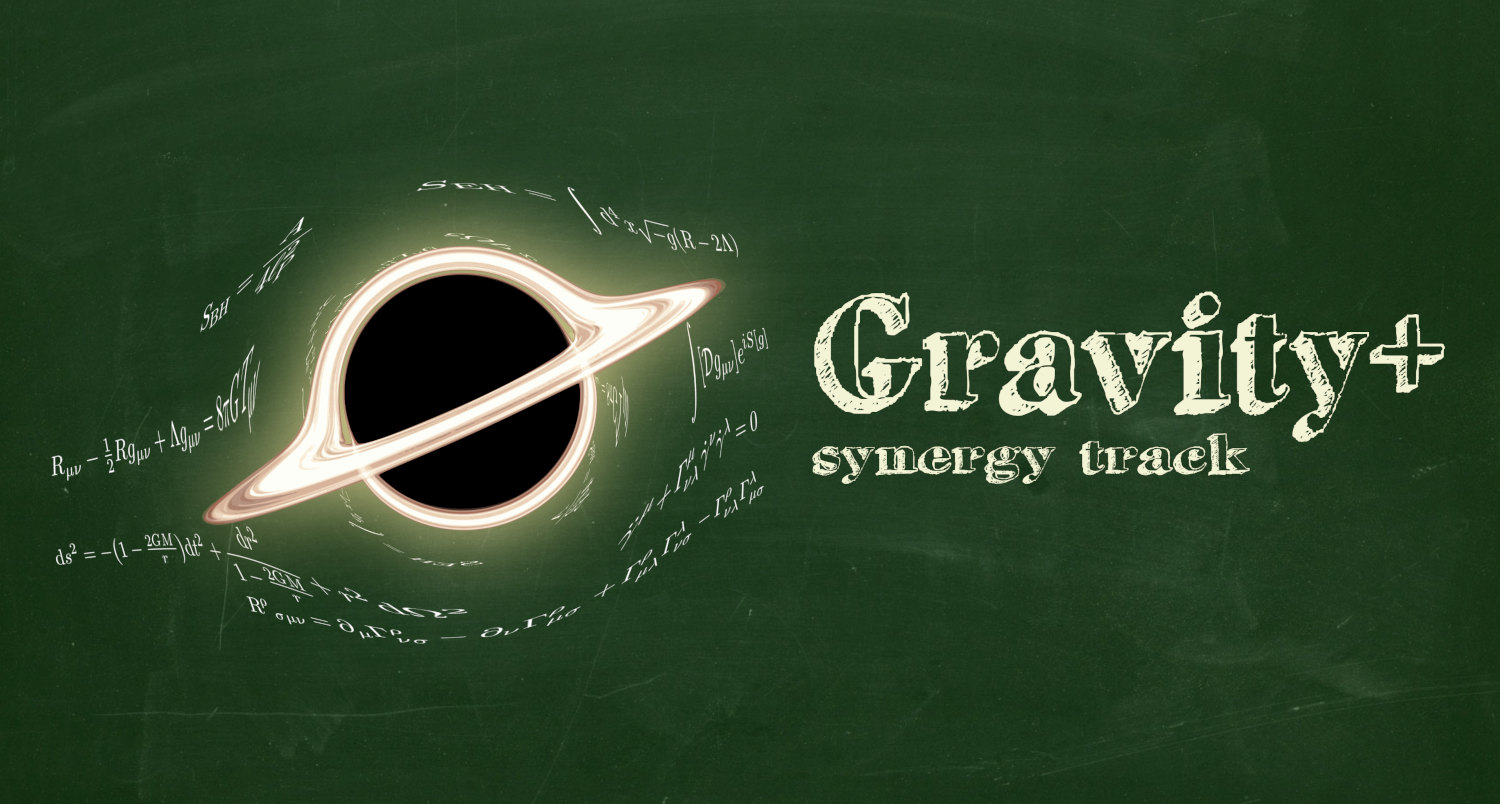
The Gravity+ synergy track reflects the unique Radboud University expertise on the role of gravity in the universe, from the largest to the smallest length scales. Follow this track during your Master’s programme in Mathematics or Particle & Astrophysics. We aim to bring students to the forefront of international research in gravity.

Curious about gravity? #
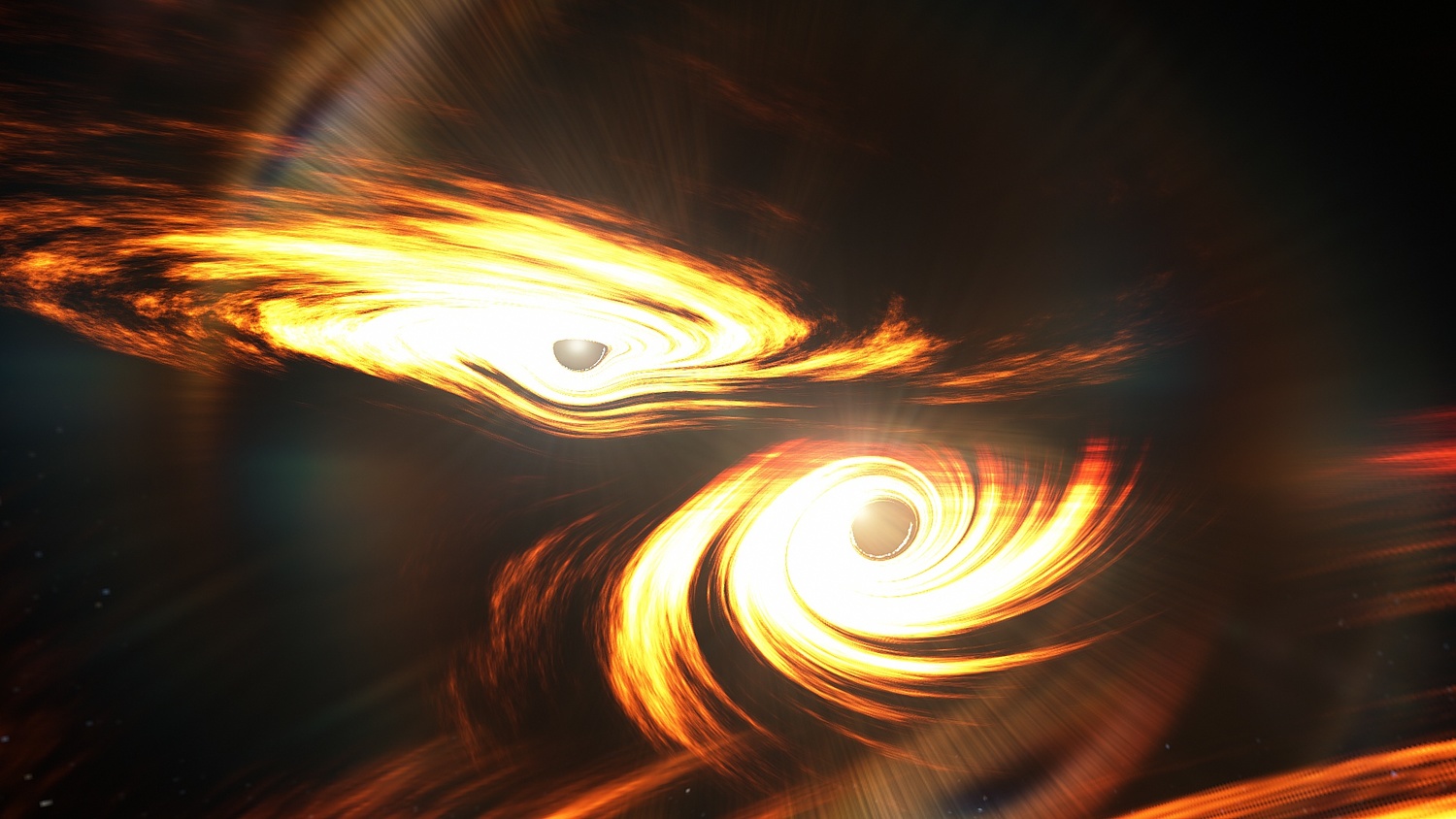
- What happens when black holes collide?
- What does spacetime look like at the tiniest of scales?
- Is there really a singularity in the center of a black hole?
- Can we test Einstein’s laws of general relativity with gravitational waves?
- How can we simulate quantum spacetime on a computer?
- What are the eating habits of supermassive black holes?
- What is the mathematics of horizons in general relativity?
- Do wormholes really exist?
Gravity+ curriculum #
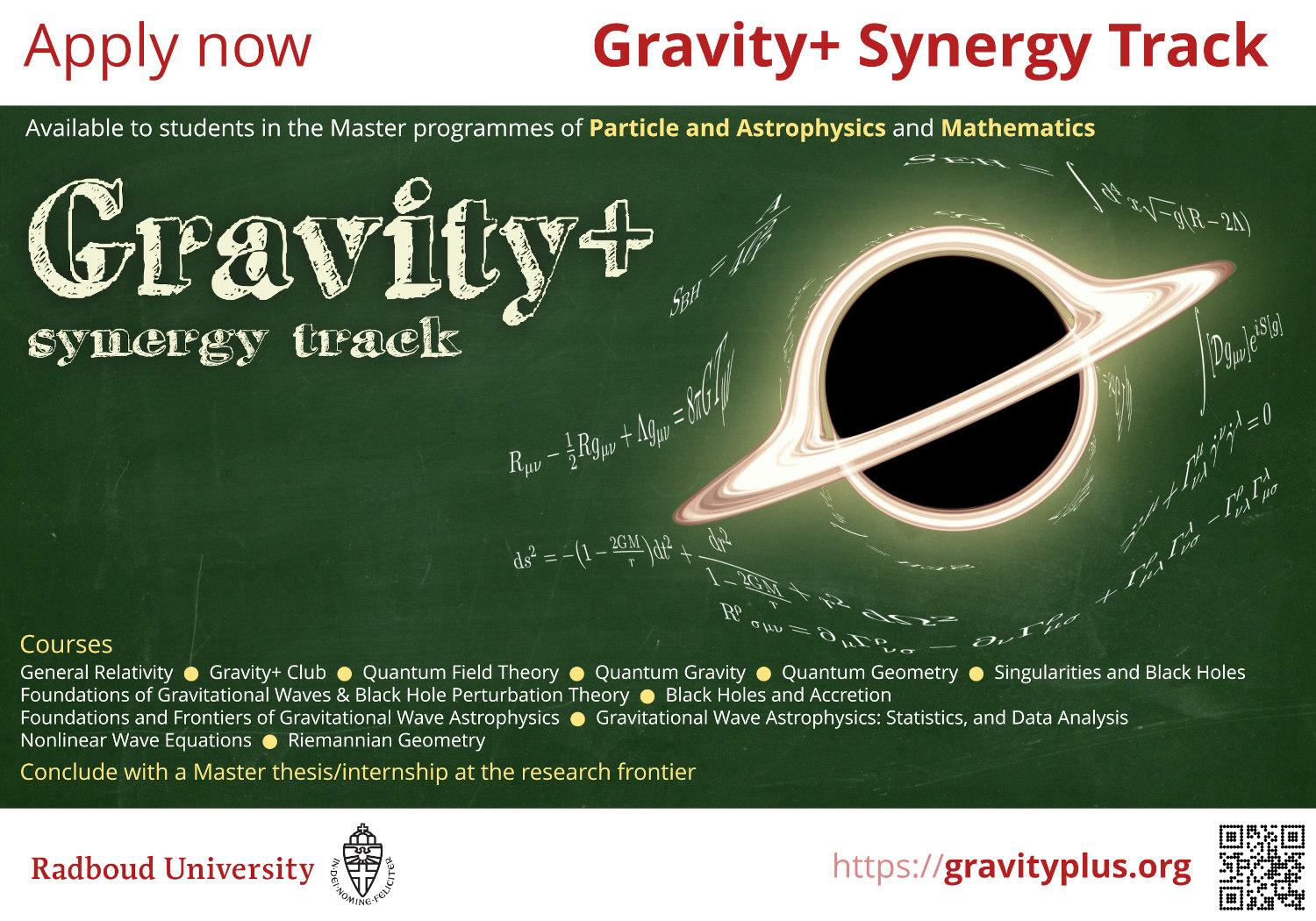
The Gravity+ synergy track can be followed as part of the Master’s programmes in Physics & Astronomy specialization: Particle & Astrophysics or Mathematics.
- For the Gravity+ track as part of Physics & Astronomy you should follow the core courses General Relativity (9EC) and Gravity+ Club (3EC) and at least 6EC of electives. Always check the current Physics & Astronomy Education and Examination Regulations (OER) for the precise requirements!
- For the Gravity+ track as part of Mathematics you should follow at least 12EC of these courses as well as 24EC of mathematical physics electives. Always check the current Mathematics Education and Examination Regulations (OER) for the precise requirements!
Courses #
General Relativity (NWI-NM107B, 9EC) Conveying the fundamental geometric concepts of the theory of general relativity and the techniques required to express them quantitatively. (Core course for the Physics & Astronomy Gravity+ track)
Gravity+ club (NWI-NM124, 3EC) A seminar-style course with annually changing overall theme, providing the opportunity to engage with local staff and contempory gravity research. (Core course for the Physics & Astronomy Gravity+ track)
Foundations of Gravitational Waves & Black Hole Perturbation Theory (NWI-NM125, 3EC) This courses studies gravitational waves in full non-linear general relativity and perturbation theory in black hole spacetimes, connecting to recent developments in gravitational wave research and black hole physics.
Quantum Gravity (NWI-NM114, 6EC) An introductory course covering different ways of quantising gravity, perturbative and nonperturbative, covariant and canonical.
Quantum Geometry (NWI-NM110, 6EC) This courses discusses the gravitational path integral in a lower-dimensional setting, leading up to a random surface description of two-dimensional quantum gravity coupled to conformal field theories.
Quantum Field Theory (NWI-NM040B, 6EC) Introducing the corner stone of high energy physics, this course introduces the modern concepts of quantum field theory of interactions between fundamental particles, with special attention to explicit calculation of physical observables.
Foundations and Frontiers of Gravitational Wave Astrophysics (NWI-NM024C, 6EC) This course gives an overview of the formation of compact binary systems and the way gravitational wave detectors are used to study these astrophysical sources.
Gravitational Wave Astrophysics: Statistics and Data Analysis (NWI-NM130, 3EC) In this course you will learn about the statistics and data analysis required to analyze gravitational wave data.
Black Holes and Accretion (NWI-NM018B, 6EC) In this course you learn about the accretion of gas onto black holes and associated astrophysical phenomena.
Singularities and Black Holes (NWI-WM159B, 8EC) This course covers mathematical aspects of Lorentzian geometry, from causality theory and global hyperbolicity to the singularity theorems of Penrose and Hawking.
Nonlinear Wave Equations (NWI-WM153B, 8EC) This course covers the mathematics of nonlinear second-order partial differential equations and their solutions. In the context of Einstein’s equations, they play a fundamental role in determining the dynamical and geometric properties of space and time.
Riemannian Geometry (NWI-WM310, 8EC) This introductory course covers the basics of Riemannian geometry, including intrinsic and extrinsic notions of curvature and their interplay. The indefinite variation of Lorentzian geometry is the mathematical language needed to understand Einstein’s general theory of relativity.
Note that this overview is subject to change and no rights can be derived from it. Check the course catalogue and the Education and Examination Regulations (OER) for the current programme and regulations.
Master’s thesis in Gravity #
Conclude your master specialisation in Physics & Astronomy or Mathematics with a Master thesis internship in one of our many areas of expertise.
Curious what’s possible? Check out recent Gravity Master’s theses in High Energy Physics.
How to register for Gravity+? #
- Apply for admission to one of the following Radboud University’s Master specialisations:
- Register in Osiris for the Gravity+ core courses.
The application deadline for non-EU/EEA nationals is 1 April 2026, and for EU/EEA nationals it is 1 July 2026 (or 1 May if you wish housing assistance by the university). Check the application procedure and scholarship opportunities carefully!

Beyond the curriculum #
Absorb the latest in gravity through our seminar series and recurring events:
Belgian-Dutch Gravitational Wave Meetings Joint Online Mathematical Relativity Colloquium (JoMaReC) Central European Relativity Seminar Gravity Lunch seminar National Seminar Theoretical High Energy Physics Quantum & Gravity seminar
At Radboud University there is ample opportunity to build your network in gravity research. A selection of the collaborations and networks that our scientists are actively involved in:
Dutch Black Hole Consortium Dutch Mathematical Relativity Group Dutch Research School for Astronomy NOVA Dutch Research School of Theoretical Physics Einstein Telescope EPS Gravitational Physics Division Event Horizon Telescope Geometry and Quantum Theory (GQT) cluster International Society for Quantum Gravity LISA Radboud Center for Natural Philosophy

Meet our scientists #
Gravity research and education at the Institute for Mathematics Astrophysics and Particle Physics IMAPP is a common theme between the three departments of High Energy Physics HEP , Astrophysics ASTRO and Mathematics MATH . Please meet the academic staff involved with the Gravity+ track.

 Jan Ambjørn
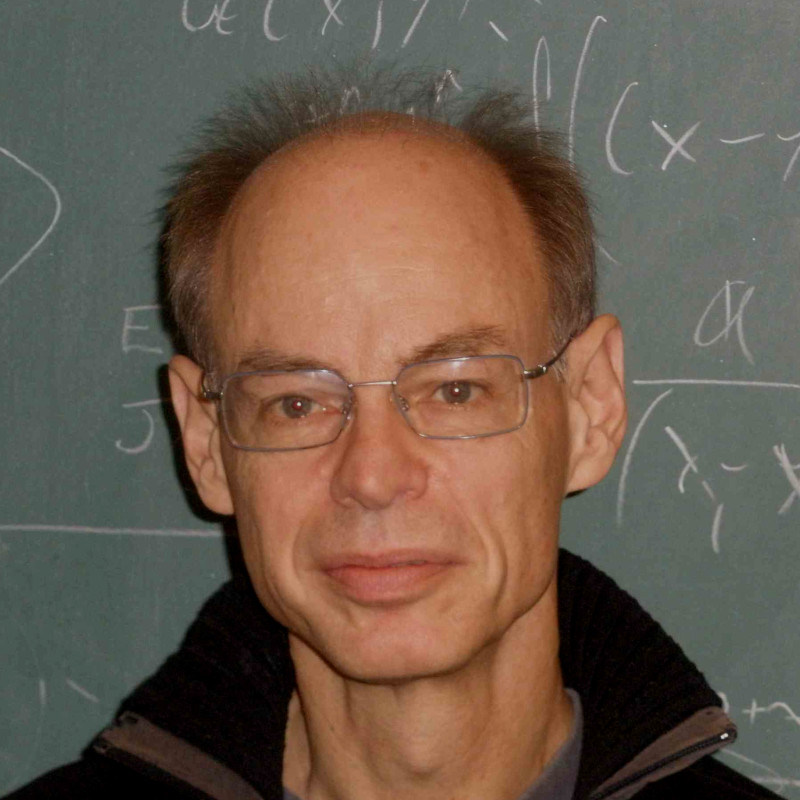
Jan Ambjørn is an expert on lattice quantum gravity, string theory, random surfaces, and gauge theory.
HEP Quantum gravity Causal Dynamical Triangulations Profile
 Béatrice Bonga
 Timothy Budd
 Annegret Burtscher
Annegret Burtscher is a mathematician exploring the large-scale geometry and dynamics of our universe based on the Einstein equations in general relativity. She uses techniques from differential and metric geometry and hyperbolic PDEs.
MATH Mathematical relativity Riemannian/Lorentzian geometry PDEs Profile Homepage
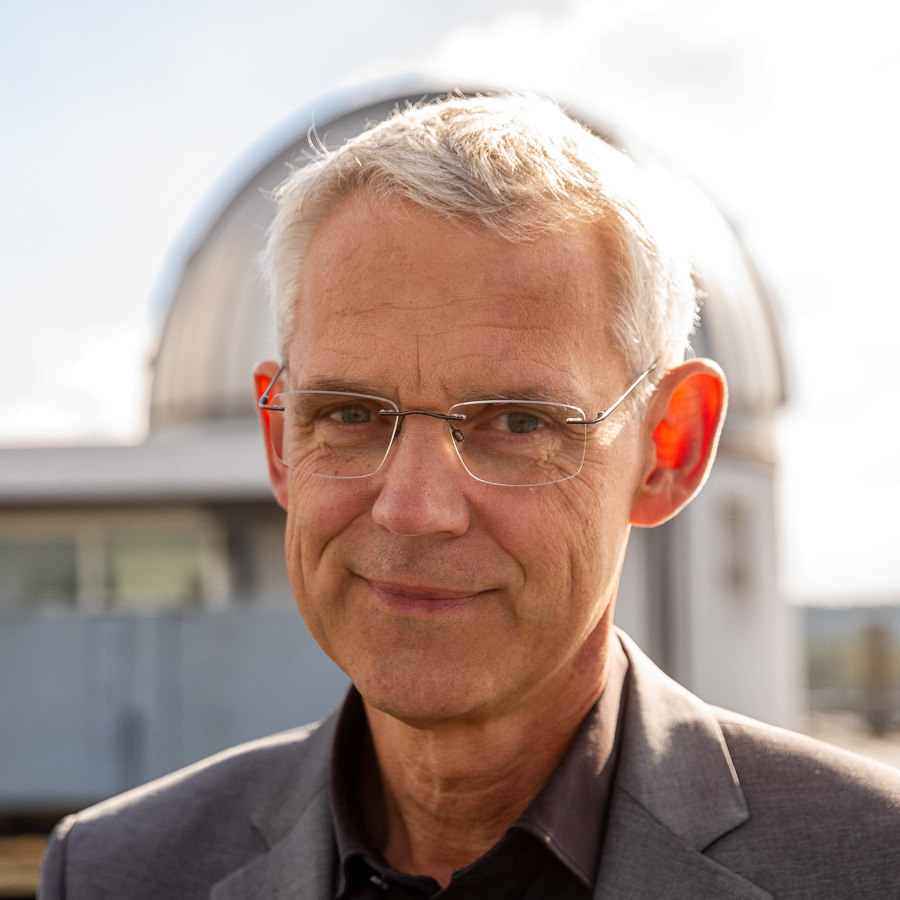 Heino Falcke
Heino Falcke is a theoretical astrophysicist and radio astronomer who made fundamental contributions to the understanding of black holes and cosmic particles. He was co-founder of the Event Horizon Telescope, which published the first ever image of a black hole.
ASTRO Event Horizon Telescope Radio astronomy Black holes Profile Homepage
 Sharmila Gunasekaran
Sharmila Gunasekaran works on mathematical relativity and geometric analysis, in particular on the stability of solutions in general relativity.
MATH Mathematical relativity Profile
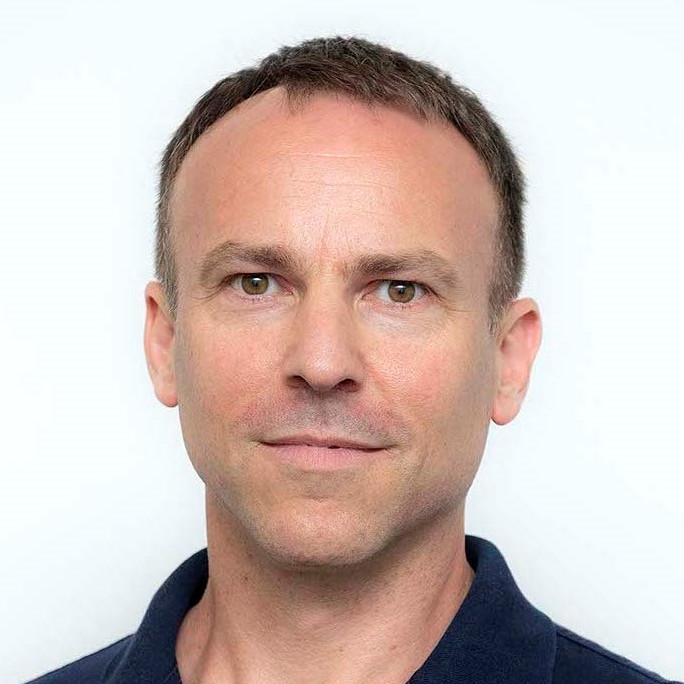 Peter Jonker
Peter Jonker discovered Fast X-ray Transients that are the topic of his current ERC Advanced grant. He combines many astrophysical techniques. He is one of the two leaders of the Dutch Black Hole Consortium. Over the years he has secured telescope time as PI on facilities such as JWST, VLT and GTC.
ASTRO Black holes Transients Observations Profile
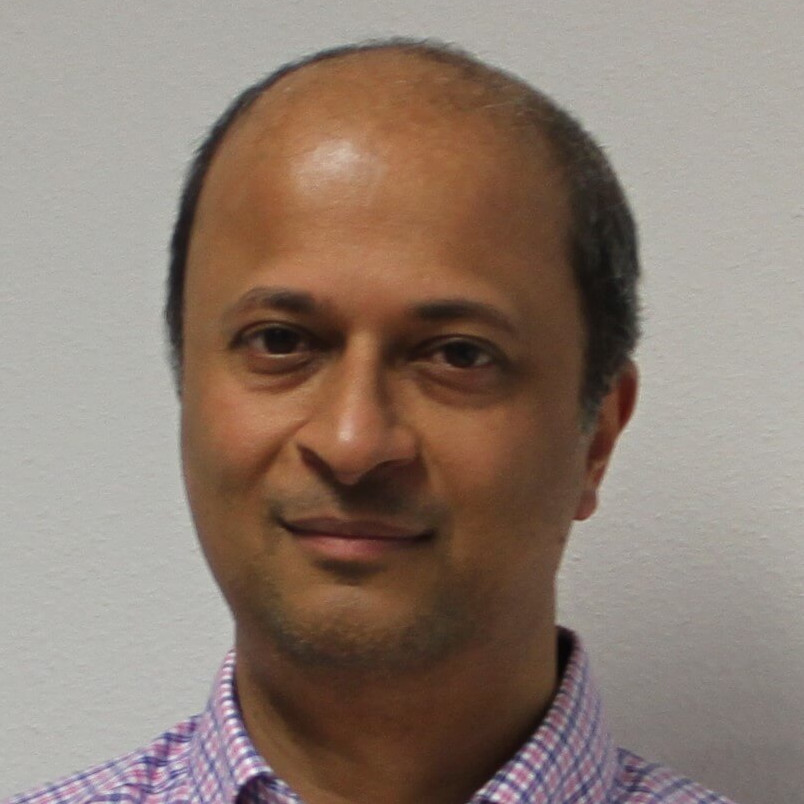 Badri Krishnan
Badri Krishnan is professor of Fundamental Physics from Strong Gravity. Detecting and Interpreting Gravitational Waves from Compact binary mergers. Observational Tests of General Relativity. Integrability and Inverse Scattering. Numerical Relativity and black hole mergers.
HEP Strong Gravity Gravitational waves Black holes Profile Homepage
 Klaas Landsman
Klaas Landsman is a mathematical physicist whose work involves a unique combination of research at the interface between mathematics and physics and deep insights into the foundations, the history and the philosophy of physics.
MATH Mathematical Physics Foundations of General Relativity Natural Philosophy Profile Homepage
 Andrew Levan
Andrew Levan is an astronomer with an interest in how stars end their lives. He studies their ends in explosions, collapses, mergers and disruptions via the bright emission they often exhibit across and sometimes beyond the electromagnetic spectrum.
ASTRO Profile
 Renate Loll
Renate Loll works on quantum gravity, reconciling Einstein’s General Relativity with the fundamental principles of quantum field theory. She is a pioneer of Causal Dynamical Triangulations, a new, nonperturbative formulation of quantum gravity based on dynamical, rather than fixed lattices.
HEP Quantum gravity Causal Dynamical Triangulations Profile Homepage
 Monika Moscibrodzka
 Gijs Nelemans
Gijs Nelemans researches the evolution of binary stars, especially the formation of binary stars consisting of white dwarfs, neutron stars and black holes and the sources of gravitational waves. In 2015, he played a key role in interpreting the first measurement of a gravitational wave.
ASTRO Binary stars GW astronomy LISA Einstein telescope Profile Homepage
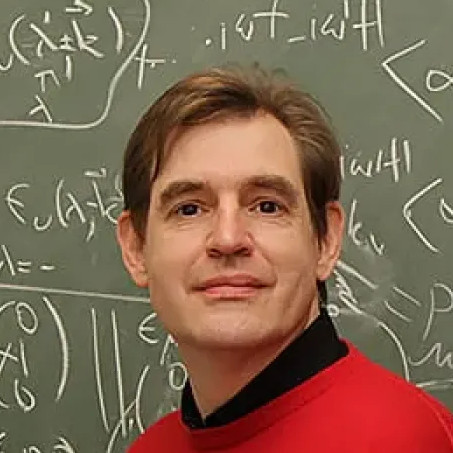 Frank Saueressig
Frank Saueressig’s research aims for the construction of a consistent and predictive quantum field theory for the gravitational force within Wilson’s modern formulation of renormalization. This research line connects several avenues towards quantum gravity including the Asymptotic Safety program and Causal Dynamical Triangulations.
 Lieke van Son
Lieke van Son is an astronomer with main research interests in gravitational-wave progenitors, binary evolution, and massive stellar evolution theory. She uses large grids of simulations to learn something about the elusive life of massive stars.
ASTRO Gravitational Wave Astronomy Binary stars Einstein telescope Black holes Profile Homepage
 Walter van Suijlekom
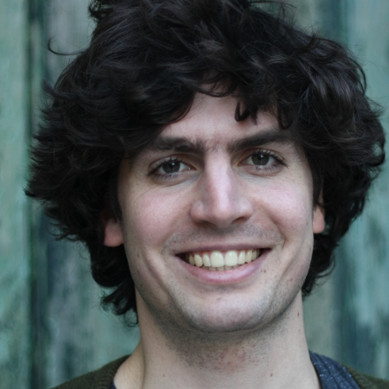 Manus Visser
Manus Visser is a mathematical physicist working on entropy of black holes and cosmological horizons.
MATH Black hole thermodynamics Profile

Meet some of our alumni #
 Berend Schneider
There are scarcely few programs in the world which could have prepared me as well as the Gravity+ track for my research, which involves mathematical aspects of GR. Some of its courses are one-of-a-kind and cover a variety of advanced topics in gravity. Any time I had a question, I would find that if an answer existed, someone would have the answer. All I had to do was find the right office door to knock on. This is very, very special! If you are as excited about gravity as I am, you will feel at home here.
PhD canditate at University of Guelph
 Juan Fernandez Molinero
My name is Juan Fernandez Molinero, currently a PhD candidate in quantum gravity at Radboud. After my bachelor’s at UCM (Madrid), I joined the master’s Gravity+ track, which strengthened my understanding of gravity and offered close interaction with leading researchers in the field.
PhD canditate at Radboud University
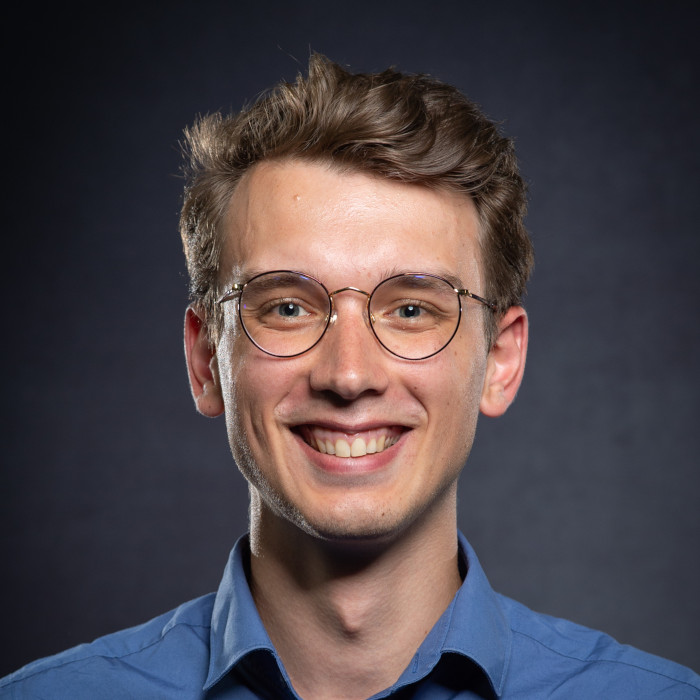 Tom van der Steen
I am a PhD student at KU Leuven, working on gravitational waves. I study the final stage of black hole mergers, when the remnant black hole “rings” like a cosmic bell, to understand what this phase can teach us about gravity. The Gravity+ track introduced me to the exciting developments in gravitational wave research and provided a strong foundation to start my academic journey in this field.
PhD canditate at KU Leuven